
When you think about dental materials, you don’t usually think about teplota skla, fyzikální vlastnost, která určuje, jak se zubní keramika chová při změnách teploty v ústech. Also known as tepelná roztažnost skla, it’s not just science—it’s what keeps your crown from cracking when you sip hot coffee or eat ice cream. Your tooth isn’t just a bone—it’s a living structure that expands and contracts with every bite, every drink, every temperature shift. If the material filling or covering it doesn’t move the same way, it cracks. And that crack? It doesn’t stay small.
Most modern crowns and veneers are made from zubní sklovina, skleněný materiál s vysokou odolností, který se používá pro estetické a funkční zubní restorace. But not all glass ceramics are equal. Some expand too much when heated, others shrink too fast when cooled. If your crown was made with a material that doesn’t match your tooth’s natural expansion rate, you’ll feel it—first with sensitivity, then with pain, and eventually with a broken crown. That’s why dentists don’t just pick a crown based on looks. They check its thermal properties. And if you’ve had a crown replaced more than once, it might not be because of poor workmanship—it could be because the material’s tepelná roztažnost, schopnost materiálu měnit objem při změně teploty was mismatched.
Even keramické restorace, zubní náhrady z keramiky, které jsou esteticky blízké přirozeným zubům a často používány pro přední zuby can fail if the lab doesn’t control the firing temperature during manufacturing. Too hot? The glass becomes brittle. Too cold? It doesn’t bond properly to the tooth. That’s why a crown made in a high-quality lab lasts longer than one made with shortcuts. And that’s also why some people feel sudden pain when they eat something hot or cold—not because of a cavity, but because the material around their tooth is reacting to temperature like a weak link in a chain.
What you’re really dealing with isn’t just a crown or a filling—it’s a system. Your tooth, the adhesive, the ceramic, and the temperature changes in your mouth all have to work together. When they don’t, you pay for it in discomfort, repeated visits, and unexpected bills. The next time your dentist talks about choosing a material, ask: "What’s the thermal expansion coefficient?" It’s not a fancy term—it’s your insurance against a broken crown next winter.
Below you’ll find real stories from people who’ve dealt with cracked crowns, sensitive teeth, and failed restorations—all tied back to one invisible factor: teplota skla. Whether you’re considering a new crown, wondering why your old one cracked, or just trying to understand why your tooth hurts after coffee, these posts give you the facts—not the marketing.
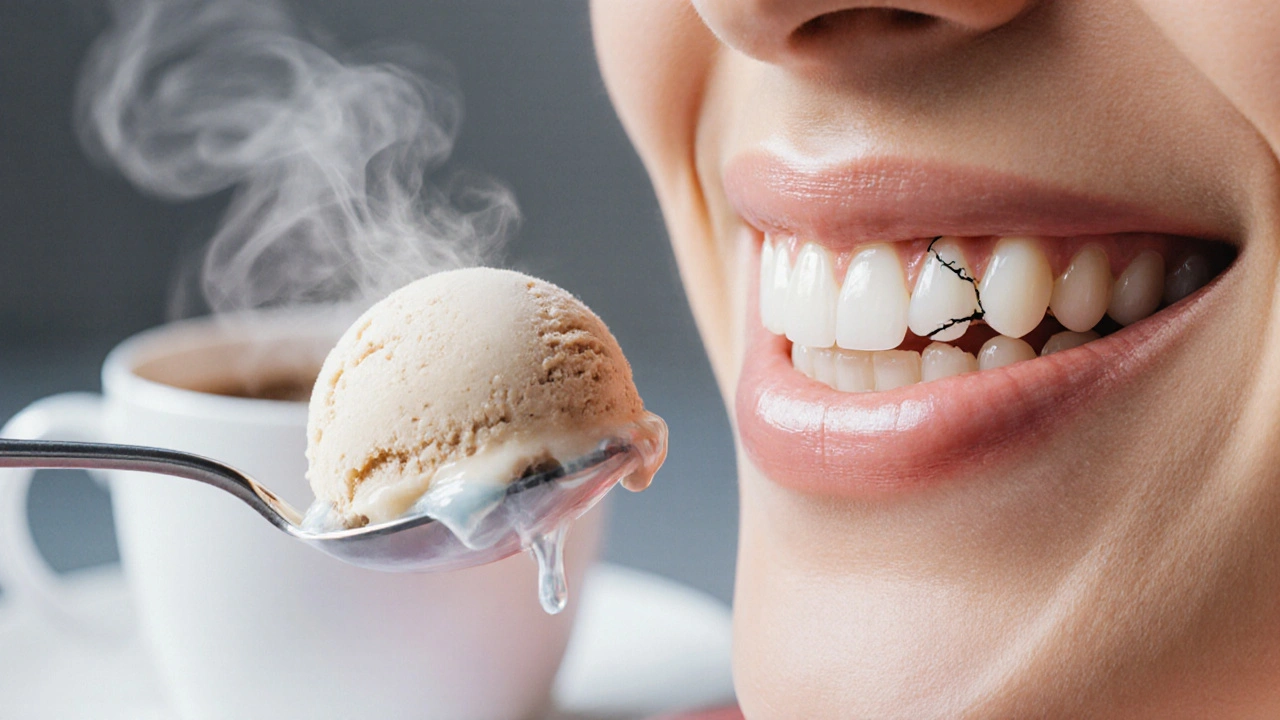
Sklo ve zubních náhradách může prasknout při rychlých změnách teploty, i když je samotná teplota nebezpečná. Zjistěte, jak funguje termální šok, jak mu předcházet a co dělat, když se vaše korunka rozbije.
Více